What Makes Turtle Lake in Saigon Special? A Visitor Guide

Novotel Saigon Centre
Languages

- English
- Tiếng Việt
- 简体中文
- See this hotel on all.accor.com or brand website in other languages :
What Makes Turtle Lake in Saigon Special? A Visitor Guide
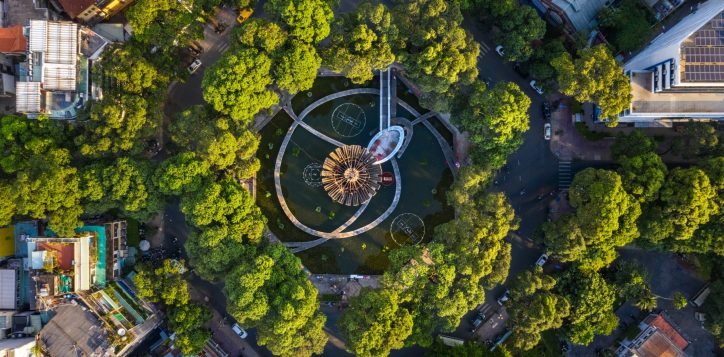
Located in the heart of Ho Chi Minh City, Turtle Lake is a familiar landmark that has been part of the city’s urban landscape for generations. Its official name is International Square, but the name “Turtle Lake” remains widely used due to its distinctive architecture and the story behind the turtle-shaped feature that was once part of the structure.
Beyond its historical significance, Turtle Lake is also a popular urban gathering space where visitors can take a walk, capture photos, enjoy local street snacks, and explore nearby attractions. From Novotel Saigon Centre, guests can easily include Turtle Lake in a walking itinerary that also covers landmarks such as the Independence Palace, Notre-Dame Cathedral Basilica of Saigon, and the Saigon Central Post Office.
Where is Turtle Lake?
Turtle Lake is located at International Square, where Pham Ngoc Thach, Tran Cao Van and Vo Van Tan streets meet. The area is now part of Xuan Hoa Ward, Ho Chi Minh City, within the former District 3 area. The surrounding neighbourhood has universities, cafés, restaurants and several attractions.
As a public space, Turtle Lake has no admission fee. Around 45–60 minutes is usually enough to see the architecture and take photos. Visitors who want to try street food, stop for coffee or continue walking to nearby landmarks may want to allow one to two hours.
How to get to Turtle Lake
From central Ho Chi Minh City, visitors can reach Turtle Lake by taxi, ride-hailing service, bus or on foot when staying near District 1 or the former District 3 area. Those travelling by motorbike should use authorised parking facilities on nearby streets.
As Turtle Lake sits within a busy traffic junction, extra care is needed when crossing the road. For visitors exploring on foot, the route from Turtle Lake to Diamond Plaza, Notre-Dame Cathedral Basilica of Saigon and Saigon Central Post Office is relatively convenient.
What is the history of Turtle Lake?
The area around Turtle Lake has gone through several stages of development alongside the history of Saigon. According to historical information compiled by VnExpress, the site was once located near the Kham Khuyet Gate of Bat Quai Citadel in the late 18th century.
In 1878, a water tower was constructed here. It was removed in 1921 as the intersection was expanded. The French later built a monument featuring three bronze soldiers and a small pool, leading the area to become known for a time as Three Figures Square.
The structure resembling the present-day site is believed to have taken shape during the 1960s and was designed by architect Nguyen Ky. In the early 1970s, the area underwent further redevelopment with a water feature, concrete columns, spiral walkways and a metal turtle sculpture placed at the centre.
This turtle sculpture gave rise to the popular name “Turtle Lake”. The official name International Square has been used since 1972, while the informal name Turtle Lake has remained in everyday use ever since.
What is special about Turtle Lake’s architecture?
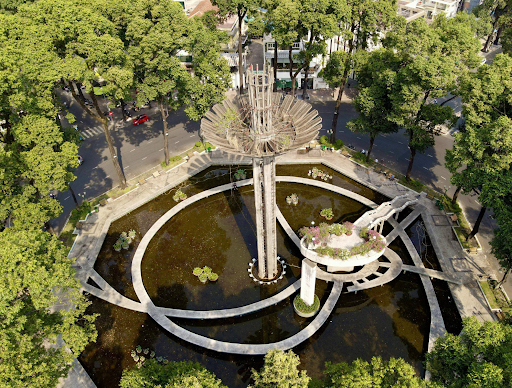
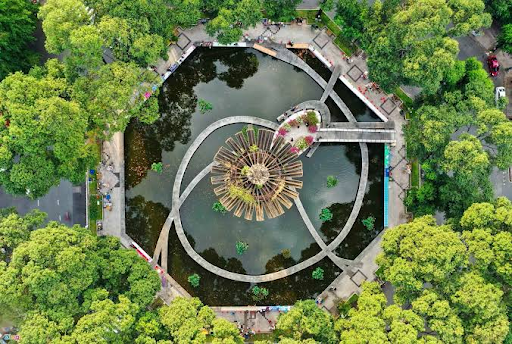
The most recognisable feature is the group of tall concrete columns rising from the centre, surrounded by water and walkways leading into the structure. Because it sits within an active traffic junction while also providing space for people to stop and gather, Turtle Lake looks quite different from a conventional park or public square.
Its steps, walkways and water features create several viewing angles. From certain perspectives, the concrete columns can resemble flower petals or open hands stretching upwards. The combination of architecture, location and historical associations has made Turtle Lake a distinctive urban landmark.
The turtle sculpture and the legend of the “dragon vein”
A turtle sculpture once stood at the centre of the site with a stone tablet on its back. In early 1976, both the turtle and tablet were destroyed in an explosion, but the name Turtle Lake continued to be used.
The site is also associated with a local legend about a “dragon vein”. According to the story, Independence Palace represents the head of a dragon, while the Turtle Lake area forms its tail, with the turtle sculpture supposedly placed there to stabilise or “seal” this position.
What can you do at Turtle Lake?
Walk around and observe everyday Saigon life
One of the simplest ways to experience Turtle Lake is to walk around the area and observe the rhythm of city life. During the day, it sits amid busy traffic while still providing places to pause around the water, greenery and walkways. Towards the evening, the area usually becomes busier with students, groups of friends and people out for a walk.
Take photos around Turtle Lake
The central structure, steps and water features provide some of the site’s most recognisable photo angles. Mornings are generally less crowded, while late afternoon offers softer light and is often more suitable for wider shots.
When taking photos, stay within pedestrian areas and avoid standing close to traffic lanes for long periods, as Turtle Lake remains part of an active road junction.
Try street food around Turtle Lake
Street food is a familiar part of the Turtle Lake experience. Around the area, visitors can often find snacks such as Vietnamese rice paper salad, grilled rice paper, fried fish balls, stir-fried corn and a variety of drinks. Nearby streets also have plenty of cafés and restaurants for those who prefer to sit down for longer.
Visit Turtle Lake in the evening
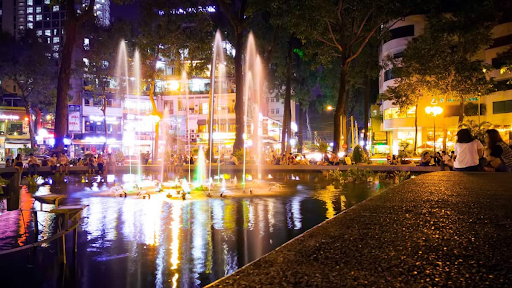
As temperatures become more comfortable, the area becomes livelier with groups of friends, people walking around and street-food activity. Lights from the surrounding streets also create a different backdrop for photography.
Visitors coming in the evening should keep personal belongings secure and take care when crossing the roads surrounding the roundabout.
Tips for visiting Turtle Lake
What is the best time to visit Turtle Lake?
Morning is a good choice for visitors who want to walk around before the area becomes too busy. Late afternoon generally offers softer light and more comfortable temperatures. Evening is suitable for those interested in the local street-food and social atmosphere.
During Ho Chi Minh City’s rainy season, it is worth checking the weather before visiting because most of the experience takes place outdoors.
How long should you spend at Turtle Lake?
Around 45–60 minutes is enough to walk around the site, look at the architecture and take photos. Visitors combining the stop with street food or coffee may want to allow one to two hours.
What should you keep in mind when visiting?
Traffic around the area can be heavy, so use pedestrian areas and check carefully before crossing the road. Those travelling by motorbike should use authorised parking facilities. During busy periods or in the evening, keep phones, wallets and other personal belongings secure.
Suggested half-day itinerary from Novotel Saigon Centre
Novotel Saigon Centre is located at 167 Hai Ba Trung, Xuan Hoa Ward, Ho Chi Minh City. Turtle Lake is approximately 500 metres from the hotel, or around a six-minute walk.
An afternoon-to-evening itinerary can begin at around 3:30 PM from Novotel Saigon Centre. After walking to Turtle Lake, spend 45–60 minutes exploring the architecture, taking photos and trying a local snack. From there, continue towards Diamond Plaza, Notre-Dame Cathedral Basilica of Saigon and Saigon Central Post Office. When the weather is suitable, these attractions can be conveniently explored on foot.
After sightseeing, return to Novotel Saigon Centre and finish the evening at OnTop Bar on level 20, where guests can unwind with views across the city.
Frequently asked questions about Turtle Lake
Is there an admission fee for Turtle Lake?
No. Turtle Lake is a public space and there is no entrance fee. Visitors only need to budget for expenses such as parking, food, drinks or transportation.
Are there actually turtles at Turtle Lake?
No. There are currently no live turtles at Turtle Lake. The name comes from the metal turtle sculpture that once stood at the centre of the structure and was destroyed in 1976.
Is Turtle Lake a natural lake?
No. It is an urban structure with a man-made water feature located at International Square. In practice, the site combines a traffic roundabout, public gathering space and architectural landmark.
Which ward is Turtle Lake in?
Under the current administrative boundaries, Turtle Lake is located in Xuan Hoa Ward, Ho Chi Minh City. Some older sources still list Vo Thi Sau Ward or District 3 because they were published before administrative changes took effect.
Is Turtle Lake worth visiting at night?
Evening is when the area becomes particularly lively with street food and social activity. Visitors can come to experience the atmosphere, but should remain aware of traffic and keep personal belongings secure.
Is Turtle Lake far from Novotel Saigon Centre?
No. Turtle Lake is approximately 500 metres from Novotel Saigon Centre, or around a six-minute walk. From there, visitors can continue on foot to Diamond Plaza, Notre-Dame Cathedral Basilica of Saigon and Saigon Central Post Office.
 Novotel Saigon Centre ☆☆☆☆
167 Hai Ba Trung, Xuan Hoa Ward, 700000 Ho Chi Minh City
Vietnam
Tel: (+84) 28 3822 4866
Email:
H7965@accor.com