Professional Hotel Seminar Planning Checklist

Novotel Saigon Centre
Languages

- English
- Tiếng Việt
- 简体中文
- See this hotel on all.accor.com or brand website in other languages :
Professional Hotel Seminar Planning Checklist
A conference that takes place within just a few hours can require preparation across many different areas, from selecting the meeting room and arranging seating to setting up presentation equipment, welcoming guests, organising tea breaks, and coordinating with speakers. Even a small detail left unconfirmed, such as missing equipment or an unsuitable room setup for discussions, can affect the flow of the event.
Therefore, creating a conference planning checklist by each preparation stage helps organisers manage tasks, budgets, and coordination more effectively with the venue team. At Novotel Saigon Centre, businesses can consider a meeting setup supported by seven meeting spaces, flexible layouts, and event services designed to accommodate different types and scales of programmes.

What should a seminar planning checklist include?
A complete checklist should cover both the programme itself and the operational tasks behind it. The main items can be summarised as follows:
| Category | What to confirm |
| Objectives | Seminar type, purpose and expected outcomes |
| Attendees | Number of guests, speakers, organisers and support staff |
| Venue | Location, capacity, accessibility and accommodation options |
| Setup | Theatre, classroom, U-shape, boardroom or other layouts |
| Technical | Projector, screen, microphones, sound, internet and power supply |
| Content | Agenda, slides, materials and timing for each session |
| F&B | Tea breaks, lunch, beverages and special dietary requirements |
| Operations | Check-in, staff assignments, signage and timeline |
| Contingency | Backup files, spare equipment and issue-response plans |
| Post-event | Feedback, cost reconciliation, photos and reporting |
Not every seminar will require all of these items at the same level of detail. However, reviewing them from the beginning helps organisers identify which areas should be prioritised based on the scale and format of the event.
Step 1 – Define the seminar objectives, scale and budget
Before searching for a venue, clarify three key elements so the right space and services can be selected:
- Define the seminar objective: A presentation-led seminar will have different requirements from a workshop involving group work or a training session that needs tables for laptops, materials and more interaction time. For client conferences or product launches, additional priorities may include a reception area, stage and branding opportunities.
- Estimate the total number of attendees: Do not count only invited guests. Include speakers, organisers, technicians, media staff and supporting partners. The total number directly affects room capacity, seating, catering quantities and check-in arrangements.
- Break the budget down by category: Include venue hire, F&B, technical equipment, decoration or printing, staffing, accommodation and a contingency budget.
- Confirm what is included in the quotation: When working with a hotel, check which services are already included in the package and which items may involve additional charges to reduce the risk of going over budget.
Step 2 – Choose the right hotel and seminar room
Location is an important consideration when organising a seminar at a hotel. For corporate events, a venue with convenient access from office districts, the airport or major roads can reduce travel time for attendees.
If guests are travelling from other provinces or overseas, it is also worth considering whether meeting facilities and accommodation can be arranged within the same hotel. Organisers should also review the reception area, parking, entrance routes and lift access.
Choose the setup based on programme activities
The same seminar room can have very different capacities depending on the seating arrangement. For this reason, venue selection should not be based only on the maximum capacity figure.
| Setup | Best suited for | Key characteristics |
| Theatre | Seminars, presentations | Maximises seating and directs attention towards the stage |
| Classroom | Training, professional workshops | Provides tables for laptops and documents |
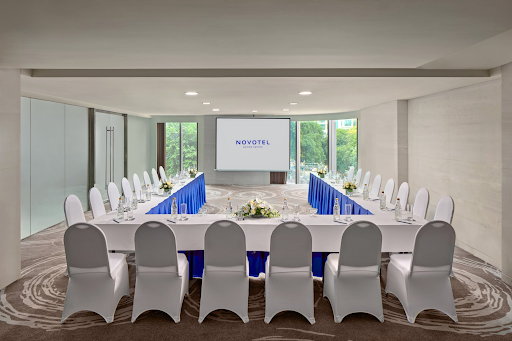
| U-shape | Training, discussion | Supports interaction between the presenter and attendees |
| Boardroom | Management meetings, small groups | Designed for direct discussion |
| Round table | Workshops, group work | Supports discussion within smaller groups |
| Cocktail | Networking | Open layout that allows easy movement |
If the programme includes different activities, such as presentations in the morning and group work in the afternoon, discuss in advance with the hotel whether the setup can be changed and how much time will be required to reset the room.
Check the areas outside the meeting room
The foyer or space outside the meeting room is often used for registration desks, tea breaks, standees and networking. These areas are easy to overlook during a site inspection but can have a significant effect on guest flow.
For programmes with several speakers, it is also useful to identify a space where they can wait, prepare materials or speak briefly with the organising team before going on stage.
Step 3 – Seminar room setup checklist
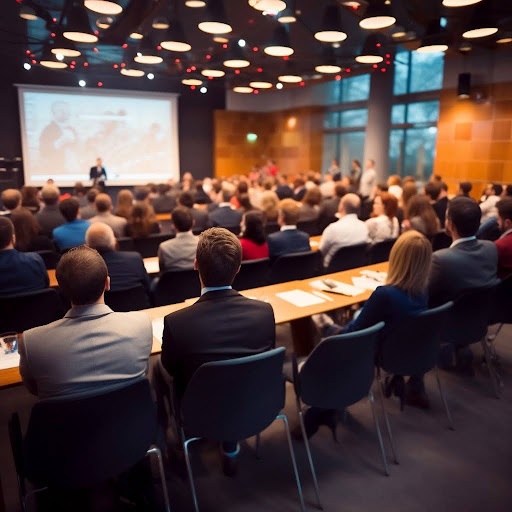
Once the venue is confirmed, the room layout should be reviewed against the actual agenda.
Start with the stage or presentation area. Organisers should check the position of the projection screen, lectern, speaker table and the sightline from the back rows. If the programme includes Q&A or requires guests to move onto the stage, access routes should be convenient.
Tables and chairs should also be arranged according to the activity. Classroom layouts usually require more floor space than theatre seating because each guest has a table. A U-shape layout creates more interaction space in the centre but reduces overall capacity.
The check-in area should be easy to identify without blocking walkways. Name tags, guest lists, event materials, standees and directional signs should be arranged in a clear flow to avoid congestion when several guests arrive at the same time.
Step 4 – Technical equipment checklist before the seminar
For presentations, prepare a main laptop, an offline copy of the presentation file and at least one backup copy. If speakers are using their own laptops, check connection ports in advance and prepare the necessary adapters.
If the seminar includes videos, test the audio embedded in the files as well. In some cases, slides display correctly while the sound fails.
The number of microphones should be based on the programme format. A presentation may require only one microphone for the speaker, while a panel discussion or Q&A session may need additional microphones to pass around the audience. Spare batteries and backup equipment should also be checked beforehand.
Internet access is particularly important for livestreams, online demonstrations or hybrid meetings. In these cases, test the connection from the exact location where the main computer will be positioned.
Finally, conduct a full technical run-through in the same order as the programme: slides, videos, sound, microphones, internet and lighting. Rehearsing according to the agenda is usually more effective at identifying issues than testing each device separately.
Step 5 – Prepare the agenda, speakers and operations team
The agenda is more than a schedule shared with attendees. For the organising team, each section should include a start time, end time, speaker, person responsible and the equipment required.
For example, if a speaker needs to play a video after ten minutes of presenting, the technician should know the exact cue so the audio source can be switched at the right moment.
Before the seminar, confirm each speaker’s arrival time, presentation duration, final slide deck and technical requirements. Assigning one person specifically to speaker support can help prevent last-minute changes from affecting the wider programme.
Operational roles should also be clearly assigned. One person should not be expected to handle check-in, speakers, technical matters and F&B at the same time. At minimum, there should be one designated point of contact between the organising team and the hotel so that all changes and requests are communicated consistently.
Step 6 – Plan tea breaks and catering
A tea break is more than just a pause in the programme. It also gives attendees time to talk, network and transition naturally into the next session.
Break timing should be based on the length of the programme. If a session runs for too long before a break, attendee concentration may decline. On the other hand, too many breaks can make the agenda feel fragmented.
For full-day programmes, tea breaks can be combined with a buffet lunch or set menu depending on the schedule and number of guests. If many attendees are dining at the same time, allow enough time for movement and service so that the afternoon programme can begin on schedule.
Organisers should also collect special dietary requirements in advance, including vegetarian meals, food allergies or specific requests from international guests.
Seminar planning timeline from one month before the event to event day
A clear timeline helps prevent too many tasks from being left until the final days.
| Timing | Main tasks |
| 4–6 weeks before | Confirm objectives, event date, budget, estimated attendance, venue and speakers |
| 2–3 weeks before | Finalise the agenda, send invitations, confirm setup, F&B, technical equipment and branding items |
| 3–7 days before | Confirm guest numbers, seating, menu, guest list, slides, run sheet and staff assignments |
| 1 day before | Inspect the room, test slides, microphones and internet, and check signage, registration desk and materials |
| Event day | Complete final testing, brief staff, welcome speakers, manage check-in, monitor the timeline and coordinate F&B |
| After the event | Collect feedback, reconcile costs, compile photos and evaluate results |
Organising a Seminar at Novotel Saigon Centre
Novotel Saigon Centre has 7 meeting rooms with a total area of 599 m².
The meeting spaces support a range of setups, from small group meetings to seminars with hundreds of attendees:
| Venue | Area | Theatre | Classroom | U-shape |
| Champagne | 300 m² | 350 | 200 | 80 |
| Bordeaux | 110 m² | 64 | 45 | 30 |
| Burgundy | 110 m² | 64 | 45 | 30 |
| Eureka | 60 m² | 30 | 22 | 18 |
Champagne is the largest space, with a 5.5-metre-high ceiling and capacity for up to 350 guests in theatre style. Bordeaux and Burgundy are better suited to small and medium-sized events, while Eureka can accommodate smaller groups. Capacity may vary depending on the seating arrangement, so the specific setup should be confirmed during the planning stage.
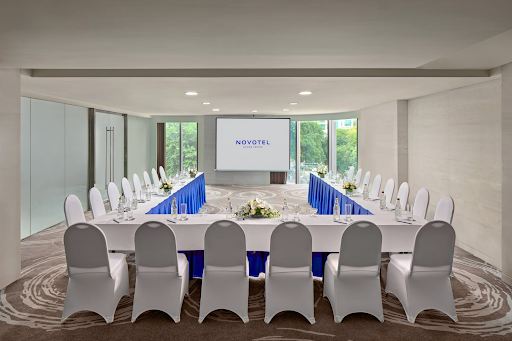
One practical advantage of organising a seminar at a hotel is the ability to combine several requirements within the same venue. Novotel Saigon Centre has 247 guest rooms, Food Exchange Restaurant on level 2 and a range of meeting spaces, making it convenient for corporate events where attendees may also require accommodation or dining at the hotel.
After the programme, OnTop Bar on level 20 can also be considered for networking or informal gatherings, depending on the event plan.
The hotel is located at 167 Hai Ba Trung, Xuan Hoa Ward, Ho Chi Minh City, in the central area, providing convenient access to many of the city’s administrative, commercial and office districts.
Frequently asked questions about organising a seminar at a hotel
How far in advance should you book a seminar room?
There is no single timeframe that applies to every event. A small seminar with a straightforward setup may require less preparation, while an event with hundreds of attendees, multiple speakers or more complex technical requirements should be planned further in advance. The most important step is to confirm the date, meeting room and key services before invitations are distributed.
What setup is suitable for a seminar with 50–100 attendees?
The setup should be selected based on the programme format rather than the number of guests alone. Theatre style works well when most of the event is presentation-led. Classroom style is practical for training sessions or when attendees need to use laptops. U-shape is more suitable for programmes that require greater interaction between presenters and participants.
What equipment should be checked when booking a seminar room?
Basic items include the presentation system, microphones, sound equipment, internet connection, power supply and any required cables or adapters. For programmes involving livestreaming, videos or multiple speakers, additional equipment and appropriate backup arrangements should also be checked.
Should a half-day seminar include a tea break?
A tea break can be useful when the programme runs for several hours or includes multiple consecutive sessions. It gives attendees time to relax and network while allowing the organising team to prepare for the next part of the programme.
What should be checked during the final rehearsal?
The entire programme should be rehearsed rather than testing each device separately. Slides, videos, sound, microphones, internet connection, speaker cues, lighting and transition times between sessions should all be tested in advance.
Is a hotel suitable for a multi-day seminar?
A hotel can be a practical option when attendees are travelling from different provinces or countries. Combining meeting rooms, dining and accommodation at the same location can reduce travel time and simplify event coordination.
Conclusion
A professional seminar depends on more than the content presented on stage. It also requires careful coordination behind the scenes, including room selection, setup, technical equipment, F&B and staff responsibilities. The clearer the checklist, the easier it is for organisers to manage progress and coordinate with the venue.
For businesses looking for seminar venues in central Ho Chi Minh City, the 7 meeting rooms at Novotel Saigon Centre can accommodate different event sizes and seating arrangements, while also providing convenient access to accommodation and dining within the same hotel.
Novotel Saigon Centre
Address: 167 Hai Ba Trung, Xuan Hoa Ward, Ho Chi Minh City, Vietnam
Phone: (+84) 28 3822 4866
Email: h7965@accor.com
Website: https://www.novotel-saigon-centre.com/
 Novotel Saigon Centre ☆☆☆☆
167 Hai Ba Trung, Xuan Hoa Ward, 700000 Ho Chi Minh City
Vietnam
Tel: (+84) 28 3822 4866
Email:
H7965@accor.com